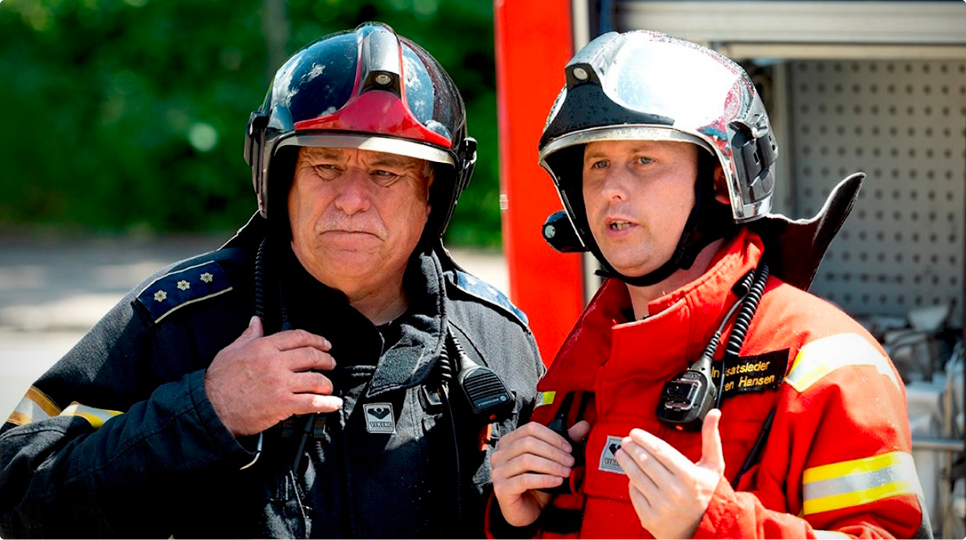
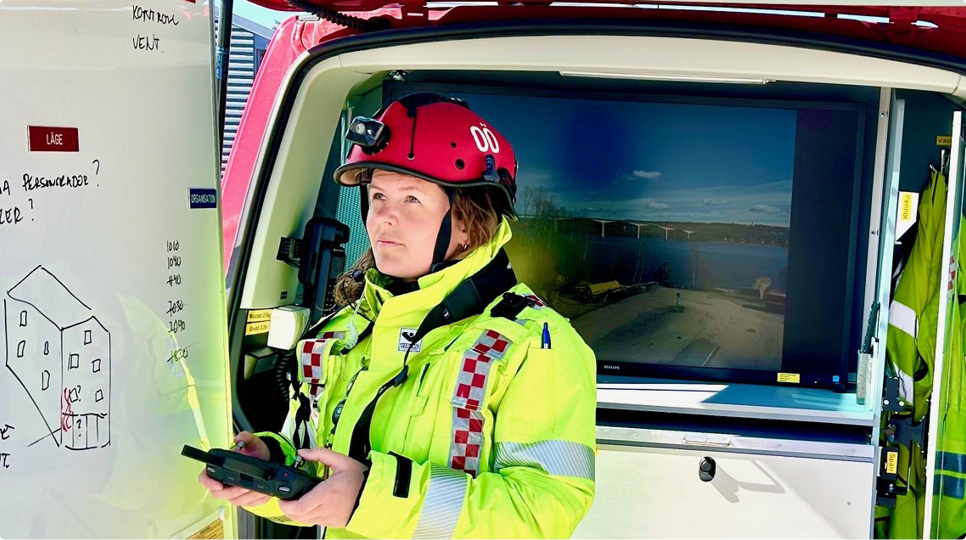
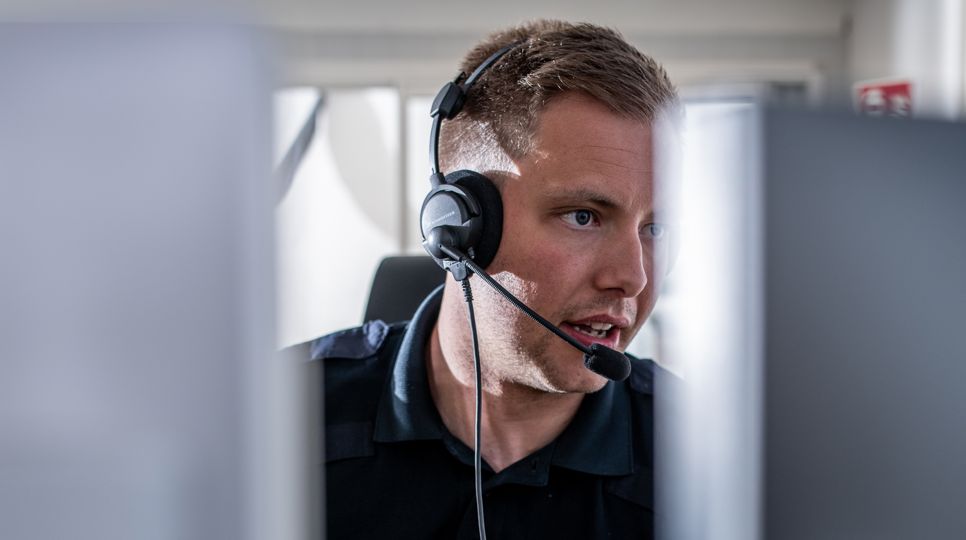
At Vestre Viken, one of the largest healthcare companies in Norway, the ambulance service has been testing Bliksund's video solution IncidentShare as a tool in daily ambulance work since autumn 2025. The experience so far is very positive.
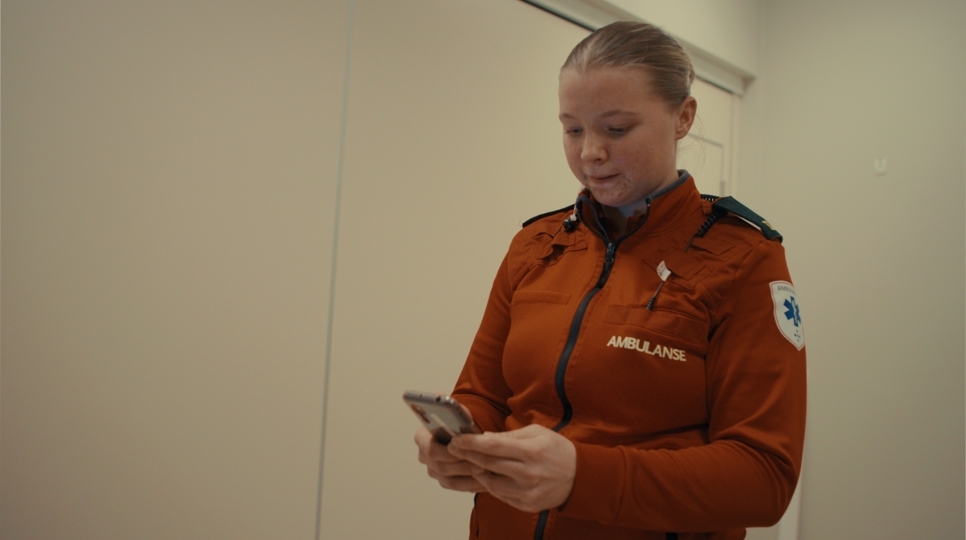
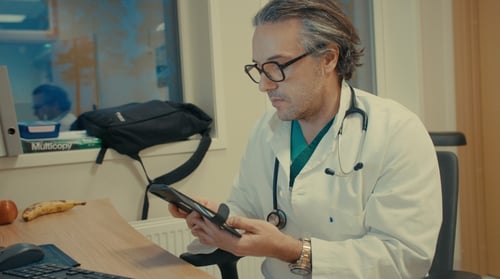
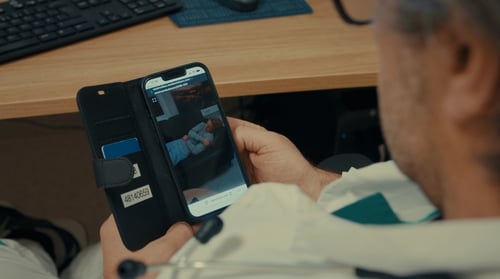
The video solution in the ambulances means that the ambulance personnel can quickly connect a doctor via video, who can see the situation with their own eyes and help make the right decisions about both treatment and patient care. This can determine whether a patient should stay at home, be taken to the emergency department or sent directly to a hospital.

"We find that consulting with a doctor through video gives our ambulance crew better decision support, which means that more patients get to the right treatment faster," says Jon Richard Figenschou, section manager at the ambulance service in Vestre Viken.
Video is actively used in the ambulances
Today, the video solution is available in all ambulances in Vestre Viken and is being tested and used in daily operations.
The ambulance staff use video in particular when they need to discuss a patient's condition, treatment or where the patient should be taken. For example, it can be in dialog with the emergency department, trauma doctor, pediatrician or neurologist.
"What we see is that ambulance crews use video actively. They use it most often in dialog with emergency services, but also with doctors at hospitals when there is a need to assess where the patient needs to go," says Jon Richard Figenschou.
Video changes the assessment and saves resources
Preliminary experience shows that video makes a real difference.
According to Jon Richard Figenschou, in almost half of the cases, the use of video has changed the assessment of where the patient should be taken. In many cases, this means that the patient does not need to be transported at all.
"In about half of the cases, the use of video has changed the paramedics' assessment of where to take the patient. Many patients actually stay at home because the doctor can use video to assess whether an ambulance is needed," he says.
"The big advantage is that the patient avoids unnecessary transportation. At the same time, we avoid unnecessary strain on both ambulances and hospitals. It's better for resources and it's better for the patient," says Jon Richard Figenschou.
Video use also has an impact on the treatment itself. In almost 30 percent of cases, the video dialog has changed the treatment given by the paramedics.
"Doctors are more confident in their assessments when they get to see the patient and not just get a verbal description. It provides better decision support and better treatment," says Jon Richard Figenschou.
Specific situations where video has made a difference
There are already several concrete examples of how video has had a direct impact on patient care.
One example involves a patient with a suspected blood clot in the brain. The symptoms were not entirely clear, and without video, the patient could have ended up in a slower process. Instead, a neurologist was connected to the video while the paramedics performed the examinations.
"The neurologist was able to see both the patient and the examinations that were performed. Based on this, the doctor was able to assess that this was a patient who needed to go directly to hospital for thrombolysis treatment," says Jon Richard Figenschou.
Another example is about a two-year-old child with a false laryngeal croup. After the first treatment, the paramedics were still unsure how seriously the child's breathing was affected. A pediatrician was therefore called in via video.
"When the doctor saw how the child was actually breathing, the assessment was clear: This child needed to be taken to hospital and seen by a doctor immediately," says Jon Richard Figenschou.
A third example shows how video can also help send the patient directly to the right treatment center. This case involved a work accident with a serious hand injury. Instead of driving the patient to the nearest hospital first, video was used to consult with both a doctor in Drammen and hand surgery expertise in Oslo.
"With the help of the video call, we quickly clarified that the patient should not be taken to Drammen first, but directly to Oslo. This is an example of how crucial time was saved and the the patient received optimal care," says Jon Richard Figenschou.
Easy solution that can be used immediately
An important reason why Vestre Viken chose Bliksund's video solution IncidentShare was that it was easy to use.
IncidentShare works by the ambulance staff sending a link to the doctor they want to talk to. The doctor opens the link on their mobile phone and the conversation can take place on video immediately. This means that the solution can be used with emergency services, general practitioners and specialist doctors without them having to have a specific system installed beforehand.
"We asked Bliksund if it was possible to come up with a solution that was easy and quick to implement and that did not challenge personal data rules - and IncidentShare was an obvious solution," says Jon Richard Figenschou.
The fact that Bliksund was already well known at Vestre Viken was also a big advantage for Jon Richard Figenschou. IncidentShare has been used with great success at the emergency call center (AMK) at Vestre Viken since 2019, and Bliksund also provides a medical record system for the ambulance service.
"We already have good experience with Bliksund - both because they provide us with a medical record system for the ambulance service and because IncidentShare has been used with great success at AMK since 2019. It was a natural step to develop the video solution in collaboration with them," says Jon Richard Figenschou.
Good collaboration with Bliksund
At Vestre Viken, Jon Richard Figenschou also emphasizes the collaboration with Bliksund as an important part of the project's success.
There have been regular meetings throughout the testing process, and although there were technical challenges in the start-up phase, they were dealt with quickly.
"We've had a really good collaboration. When we've had challenges, we've received immediate answers and the problems have generally been solved within a day or two," says Jon Richard Figenschou.
The collaboration agreement has been extended throughout 2026, and work now continues to both increase usage and document the benefits even more clearly.
The future: More video and better coherence
At Vestre Viken, the ambition is that video will eventually become even more integrated into the workflows and preferably directly into the medical record system when the framework for it is in place.
At the same time, Jon Richard Figenschou sees great potential in creating even better coherence across services and sectors.
"We hope that in the future we can connect more people in the same assessment. Collaboration across sectors is very important. Being able to bring more people into the same video assessment will provide a completely different understanding of the situation," says Jon Richard Figenschou.
The perspective therefore extends beyond the ambulance alone. In the long term, video can help strengthen collaboration between ambulance services, emergency medical services, hospitals, municipal services and potentially other emergency response actors.
"It's definitely achievable. But we need to continue to research it and measure the effects. That's what creates the basis for taking it further," says Jon Richard Figenschou.