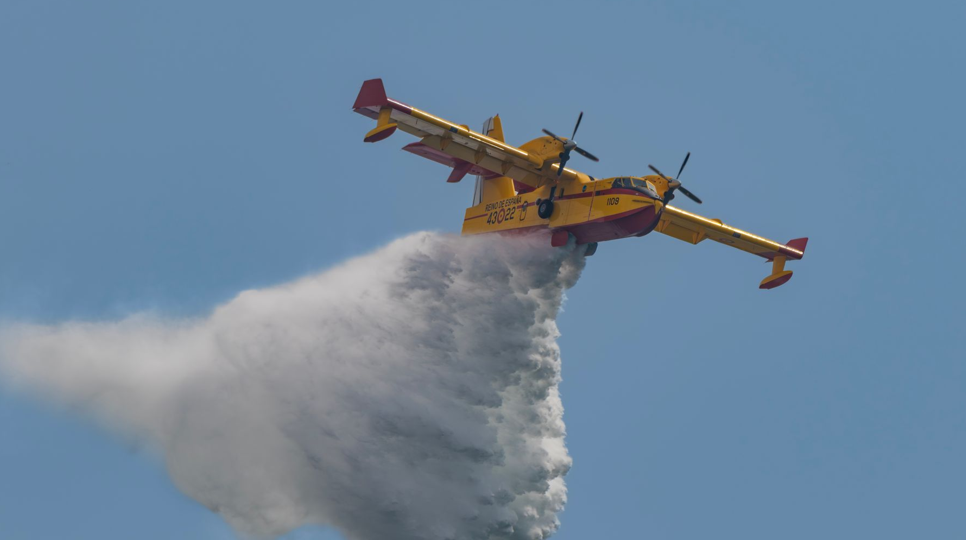
In July 2026, two Swedish Air Tractor AT-802F Fire Boss aircraft from the EU's rescEU fleet flew south to fight forest fires in France. By late July, fires in France and Spain had forced more than 300,000 people from their homes, and aircraft, helicopters, drones and crews from across Europe were working the same fire lines.The pilots saw the fire front more clearly than anyone on the ground. The operational question is simple: could the French incident commander see it too?
On 30 September 2026, the European Commission proposed a new EU Critical Communication System (EUCCS) to answer exactly that kind of question. It is the right foundation. This article explains what the EUCCS is, why a network alone will not solve cross-border situational awareness, and what fire, police, border and health services can do before the system arrives.
What is the EU Critical Communication System (EUCCS)?
The EUCCS is a proposed EU-wide system that connects national critical communication networks so police, fire, emergency medical services and civil protection can communicate securely across borders in real time. It covers all EU member states and Schengen associated countries, according to the European Commission.
The Commission is candid about today's starting point: national critical communication systems are neither technically compatible nor interlinked. The proposal sets out to change that in four ways:
- Broadband instead of narrowband. The 31 participating countries will gradually move from narrowband radio to broadband technology such as 5G.
- Satellite backup. EU satellites provide a fallback when ground networks fail, for example during a blackout.
- Real-time data, video, messages and geolocation shared through a single secure device.
- Central monitoring. An EU Network Monitoring Centre and an EU Security Monitoring Centre handle connectivity and cyber threats, while member states keep control of their national networks.
The Commission also notes the system can serve coordination with other services, such as the armed forces. The proposal now goes to the European Parliament and the Council, with a gradual rollout and a transition period for member states starting in 2030.
Why does cross-border communication fail during wildfires?
It fails because the resources are shared across Europe, but the systems that carry voice, video and data are still national. The summer of 2026 made that gap visible.
France activated the EU Civil Protection Mechanism on 5 July, and the Commission mobilised four rescEU aircraft from Sweden and Cyprus the next day. Sweden's contribution was its two Fire Boss aircraft, flown and maintained by Saab from Skavsta. By 27 July, Agence Europe reported that France had received seven aircraft and four helicopters from the rescEU reserve, while uncontrolled fire areas exceeded 80,000 hectares in Spain and 42,000 hectares in France.
Picture the command structure in that situation. A Swedish aircrew, a Croatian Canadair, Czech and Slovak helicopters, French ground crews, a regional crisis management centre and an EU liaison officer in Bordeaux. Each brings its own radios, its own devices and its own way of handling video. Aerial footage that shows where the fire is heading only helps if it reaches the people deciding where to evacuate next.
That is why we need a more robust way of communicating across borders. Not a better radio in each country, but a shared way to move information between them.
How can drone and aircraft video be shared between Frontex and national authorities?
It can be shared when the video can leave the platform that captured it and reach any authorised screen, whatever network, device or agency sits at the other end. Europe's external borders show why this matters as much as the fire line does.
Under its Multipurpose Aerial Surveillance concept, Frontex uses aircraft that stream video and other data directly to its headquarters in Warsaw, where analysts inform national authorities about activity at their borders. The agency hires operators for both manned aircraft and drones to deliver that live surveillance data, across all of Europe's external borders.
The missions are multipurpose: fighting cross-border crime, and saving lives at sea. In both cases the value of a live drone feed depends on who can see it. A coast guard vessel, a national maritime rescue centre, border police on the ground and a regional hospital preparing to receive casualties may all need the same picture at the same time.
The same pattern repeats at home. Local fire services now fly their own drones over large incidents, police use them for search and public order, and ambulance services receive video from callers' smartphones. Every one of these feeds becomes more useful the moment it can be shared across agencies and borders.
Why is a shared network not enough?
A network moves data; it does not decide how video is received, managed, shown and handed on between organisations. That work happens in the layer above the network, and it needs its own standards, protocols and software.
Think of the EUCCS as a European motorway for critical communication. It gives every country a secure road to drive on. But the vehicles still need to fit the road, and the people at the destination still need to unload what arrives. In practice that means:
- Common formats and protocols, so a video stream from a Swedish aircraft or a Frontex drone opens on a French or Danish screen without conversion.
- Access control across organisations, so the right people in another agency or country can join a feed without new accounts, apps or IT projects.
- One view for many sources, so an incident commander sees drone, aircraft, bodycam, vehicle and caller video side by side, on a map, instead of on five separate systems.
- Network independence, so a feed keeps flowing when it switches from 5G to satellite or to a commercial mobile network.
Radio, video and data are the three essentials. The prioritised network carries them. The sharing layer is what turns them into common situational awareness.
What can civil responders learn from Link 11 and Link 16?
They can learn that a common standard, not a common radio, is what made coalition forces work as one. Military forces solved the cross-border sharing problem decades ago with tactical data links.
Link 11, introduced in the 1970s, let ships and aircraft from different NATO navies exchange radar tracks and share one tactical picture. Its successor, Link 16, standardised in NATO as STANAG 5516, added jam-resistant, secure exchange of positions, targets and messages between aircraft, ships and ground units. It is still the backbone of coalition air operations today.
The lesson is in how it worked. Each nation kept its own aircraft, ships and national command systems. What they shared was an agreed message format and protocol. A Norwegian frigate and a US aircraft could see the same picture because both spoke the same language, not because they bought the same equipment.
Civil emergency services have never had their own Link 16 for video. The EUCCS provides the road. Civil responders still need the equivalent of that shared language for live video and data, so a fire service, a police unit, a border agency and a hospital can all see the same picture across national lines.
What can first responders do before the EUCCS arrives in 2030?
They can start sharing video across agencies and borders now, on the networks they already have. The EUCCS transition starts in 2030. That is at least four more fire seasons, and four more years of border operations, on today's systems.
This is the scenario IncidentShare was built for, and the name says so. IncidentShare receives, manages and shares live video and audio between separate devices, over different types of networks, including satellite and 5G. It connects fire and rescue, police, health services and military users, nationally and internationally.
In practice, a dispatcher can take in video from a drone, an aircraft, a bodycam, a vehicle or a 112 caller's smartphone, then invite a specialist or a partner agency into the same feed through a secure link, with no app to install. Customers such as Hovedstadens Beredskab, which has used live video streaming for more than ten years across around 20 camera sources, already work this way day to day.
When the EUCCS is in place, it will make that sharing faster and more resilient. The operational habit of sharing can be built today.
Key takeaways
- The EUCCS, proposed on 30 September 2026, will connect Europe's national critical communication networks, with a transition starting in 2030.
- The 2026 wildfires in France and Spain showed that shared European resources still depend on national, unconnected systems.
- Frontex drone and aircraft surveillance creates live video that only has value when national authorities can see it.
- A network is the foundation, but cross-border situational awareness also needs common standards, protocols and sharing software.
- Agencies can start sharing live video across networks, agencies and borders today.
Want to see how cross-agency video sharing works in a live operation?
Book a demo of IncidentShare and see how live video could benefit your organisation.
Frequently asked questions about IncidentShare
Can IncidentShare share live video across national borders today?
Yes. IncidentShare receives, manages and shares live video and audio between separate devices and organisations over existing networks, including satellite and 5G. It does not require the EUCCS or any new network infrastructure to work across borders.
Which agencies and services can IncidentShare connect?
IncidentShare connects fire and rescue, police, health services and military users, both nationally and across borders. A dispatcher can invite a specialist or a partner agency into a live feed through a secure link, with no app to install on the receiving end.
What video sources does IncidentShare support?
IncidentShare works with drones, manned aircraft, bodycams, vehicle-mounted cameras and live video from callers’ smartphones. All sources appear in a single operational view, on a map, so an incident commander sees everything in one place rather than across separate systems.
Does IncidentShare work when networks switch between 5G and satellite?
Yes. IncidentShare is network-independent and keeps feeds running when connectivity switches between mobile networks, satellite and other available connections. This makes it suitable for large outdoor incidents where ground networks are unreliable or overloaded.
How quickly can IncidentShare be deployed?
IncidentShare is a standalone platform that does not require deep integration projects. It can be deployed in hours, which is why fire services, police and health organisations across more than 30 countries have been able to adopt it without lengthy procurement and implementation cycles.
How does IncidentShare handle access control across organisations?
Access is role-based and managed centrally. An operator can share a live feed with a partner agency or specialist through a secure link without creating new accounts, installing apps or setting up IT projects on the receiving side. Every session is logged, supporting audit trails and after-action review.
What can emergency services learn from military tactical data links like Link 16?
Military forces solved the cross-border sharing problem decades ago with a common standard, not a common radio. Link 16, still the backbone of coalition air operations today, allowed aircraft, ships and ground units from different NATO nations to share the same tactical picture because they agreed on a message format and protocol, not because they bought the same equipment. The lesson for civil emergency services is the same: shared situational awareness does not require every agency to replace its systems. It requires a common language for moving information between them.