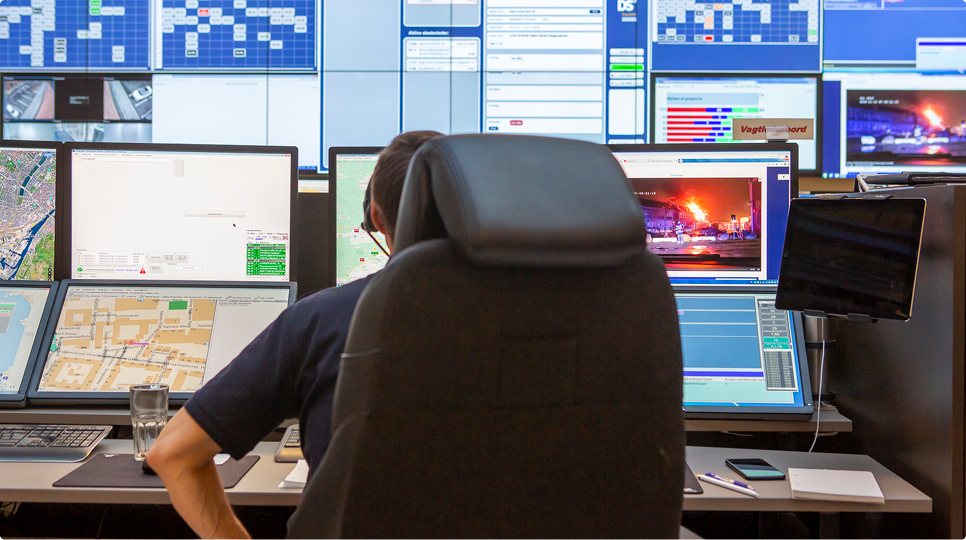
In Denmark, that same 112 line and the same control room infrastructure serve fire and rescue, police, and ambulance dispatch. Whatever the dispatcher cannot picture, none of the three services downstream can picture either.
Videolink closes that gap. It is a browser-based, SMS-delivered video link that lets a dispatcher open a live video connection with a caller's own phone, no app, no download, no account. The dispatcher sends a text, the caller taps it, and within seconds the control room has a second channel: sight, alongside sound.
What is Videolink for emergency dispatch?
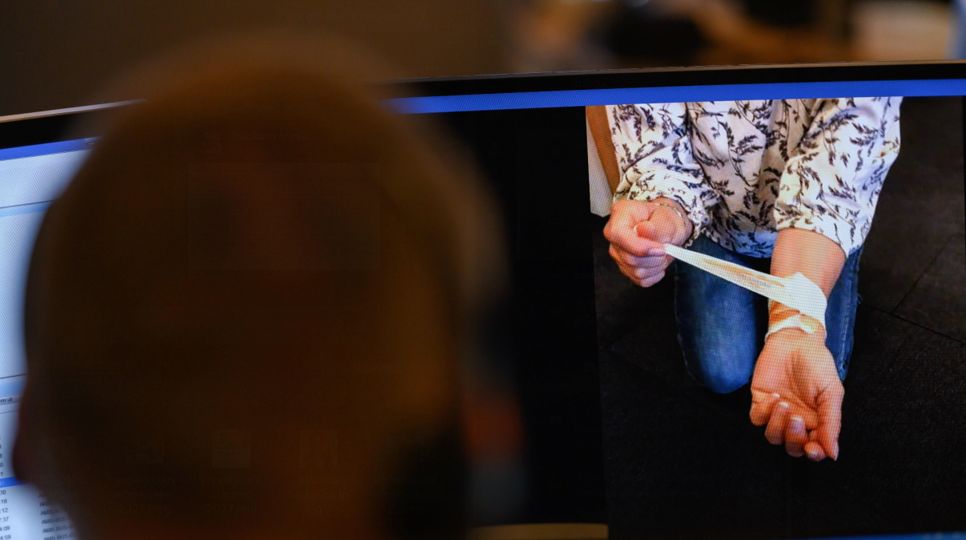
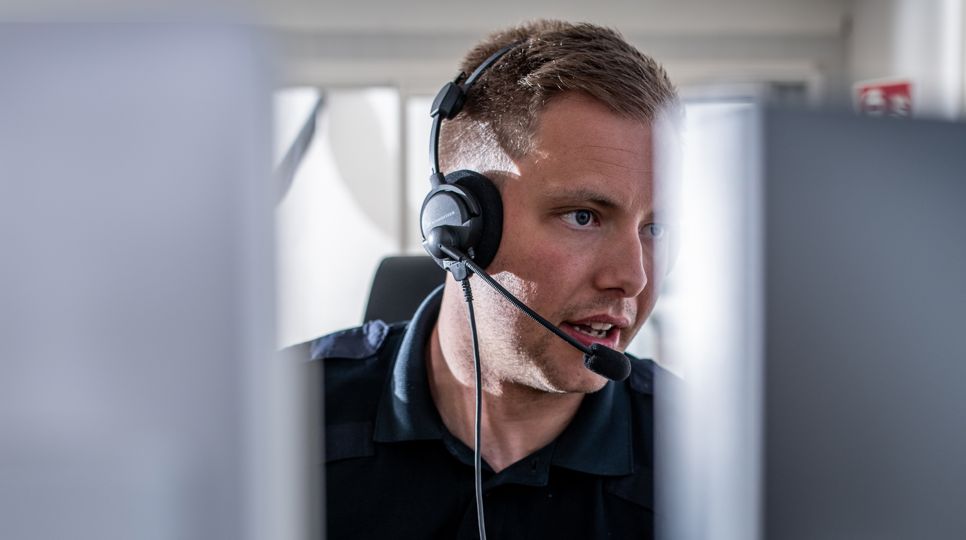
Videolink is a way for a 112 or control room dispatcher to start a live video call with someone's phone using nothing but a text message. The dispatcher sends an SMS containing a secure link. The recipient taps it, their browser opens a camera connection, and the dispatcher sees the caller's surroundings in real time. Because it runs in the browser, it works on almost any phone the caller already has in their hand, which matters when the caller is a frightened bystander, not a trained responder carrying dispatch software.
By default, the view runs one way: the dispatcher sees the caller's scene, the caller does not see the dispatcher. If the situation calls for it, the dispatcher can turn on their own camera too, so the caller sees a face on the other end of the line rather than just hearing a voice.
The same mechanism, opened from the same dispatch platform, serves fire and rescue, police, and ambulance services. A shared national emergency number benefits from a tool that does not care which of the three services is on the other end of the call.
How does two-way video change what a caller experiences?
For the dispatcher, one-way video already removes most of the guesswork from triage. A verbal description of "a lot of smoke" covers a wide range of actual severity. A ten-second look at the scene often settles the question of which resources to send and how urgently, and lets the dispatcher give specific, visual instruction: "keep the pressure exactly there" instead of asking the caller to describe a wound they have never had to look at closely before. In an AMK Vestre Viken innovation project running video-enabled calls through 2021, urgency grading changed in 176 of the calls where video was used, and it moved down far more often than up, 136 downgrades against 40 upgrades. That pattern, more accurate triage rather than more alarming triage, is what makes the case for resourcing: fewer units sent on calls that turn out less serious, without missing the ones that need a faster response.
The dispatcher's own camera is there for the moments when being seen matters as much as seeing. A caller who is panicking, a child alone with an unconscious parent, someone in the middle of a violent situation, can be calmed by a face on the other end of the line rather than just a voice. Turning on the dispatcher's camera is a judgement call, used for reassurance or safety rather than by default, which keeps the tool practical: dispatchers are not expected to be on camera for every call, only the ones where it genuinely helps.
How does SMS-to-video work across fire, police, and healthcare dispatch?
It works the same way regardless of which service picks up, because the underlying call handling is built once and shared. Räddningstjänsten Skåne Nordväst, a Swedish fire and rescue service working within the SOS Alarm dispatch environment, uses the same SMS-to-video approach alongside bodycam streaming from responding crews. The video link to the caller and the live feed from the crew on scene sit in the same operational picture, so the person coordinating the response is not switching between separate systems to understand what is happening on both ends of the incident.
That consistency is what makes the tool practical for a combined emergency number. A control room does not need three different video tools for three different services. It needs one that works the same way every time, for whoever answers the call.
What does this look like in a real control room?
Vestre Viken's own numbers trace the arc from pilot to embedded practice. An earlier innovation project ran video-enabled calls from April to December 2021: dispatchers offered video on 2,066 emergency calls and completed 1,631 of them, a 79 percent success rate, with the average call connecting in 40 seconds and running for under three minutes of video. In a survey of 143 operators taken during that pilot, 93 percent said video was useful in the emergency call, and only 7 percent said it was not. Out of the more than 1,600 completed calls, just five were logged as showing operators something visually distressing, a reassuring number for anyone worried that giving dispatchers a live camera feed adds a wellbeing cost of its own.
By 2023, the same service logged 3,258 video calls in nine months, close to ten percent of all their consultation calls, with an internal target of 25 percent the following year. Video changed the clinical assessment in close to half of calls and changed the treatment plan in nearly three in ten. Read together, the two data sets describe the same trajectory control rooms tend to see: a cautious pilot that proves itself quickly, then becomes a routine part of how a call is handled.
The pattern holds across sectors. Whether the person on the other end of the link is a caller reporting a fire, a bystander at a car accident, or a patient describing symptoms to a clinician, the value of the video is the same: it replaces an approximation with a direct look.
Frequently asked questions
Does the caller need to install an app to use Videolink?
No. The link opens in the phone's existing browser. There is nothing to download and nothing to configure before the call.
Can Videolink be used across different emergency services on the same number?
Yes. Because it runs from the dispatch platform rather than from a service-specific app, the same mechanism supports fire, police, and healthcare dispatch operating under a shared emergency number.
Is the video call two-way?
By default, the dispatcher sees the caller and the caller does not see the dispatcher. The dispatcher can choose to turn on their own camera when reassurance or safety makes that useful, so two-way video is available but not automatic.
Does starting a video call delay dispatching help?
In practice, not for the most urgent calls. In the AMK Vestre Viken pilot, the median time to decide on an ambulance for acute-graded calls was slightly faster with video than without, 1 minute 12 seconds against 1 minute 20. For less urgent, haste-graded calls, deciding took somewhat longer with video, 3 minutes 34 seconds against 2 minutes 55, which reflects a more thorough look before committing a resource rather than a delay working against the caller.
What happens to the video after the call ends?
Handling and retention depend on each control room's own policies and national data protection requirements. This is a detail worth confirming directly for your service.
Key takeaways
Videolink turns a voice-only 112 call into a live video connection, opened over SMS with no app required. By default the dispatcher sees the caller's scene, with the option to turn on their own camera for reassurance or safety when it is genuinely needed. Because it runs from a shared platform, it fits naturally into a combined emergency number covering fire, police, and healthcare. And the numbers from a service that has used it since 2021, a 79 percent connection success rate, 93 percent of operators finding it useful, urgency corrected far more often downward than upward, and treatment plans changed in nearly a third of consultation calls, suggest the impact is operational, not cosmetic.
If your control room is exploring live video for 112 or emergency dispatch, get in touch to walk through how Videolink fits your setup, or see how Räddningstjänsten Skåne Nordväst used live video with bodycam streaming on the Bliksund blog.