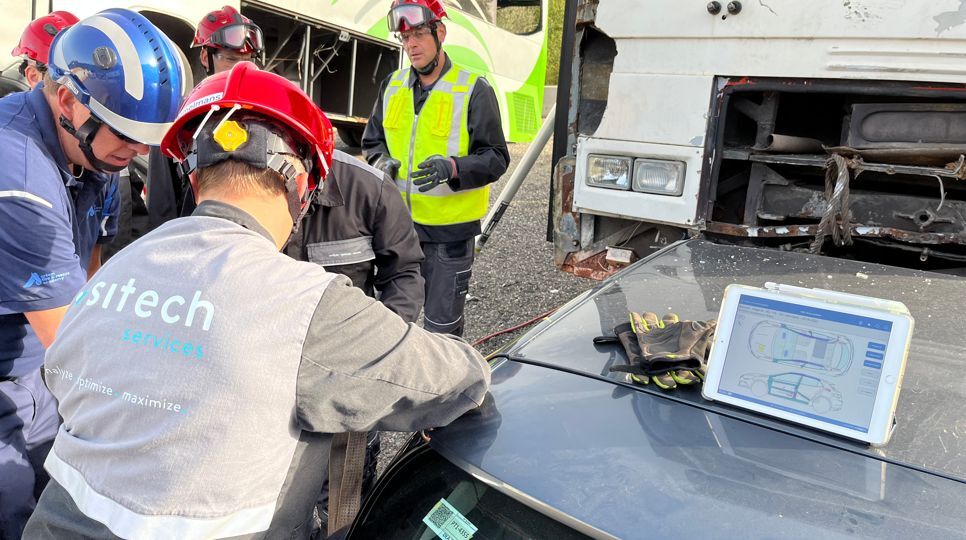
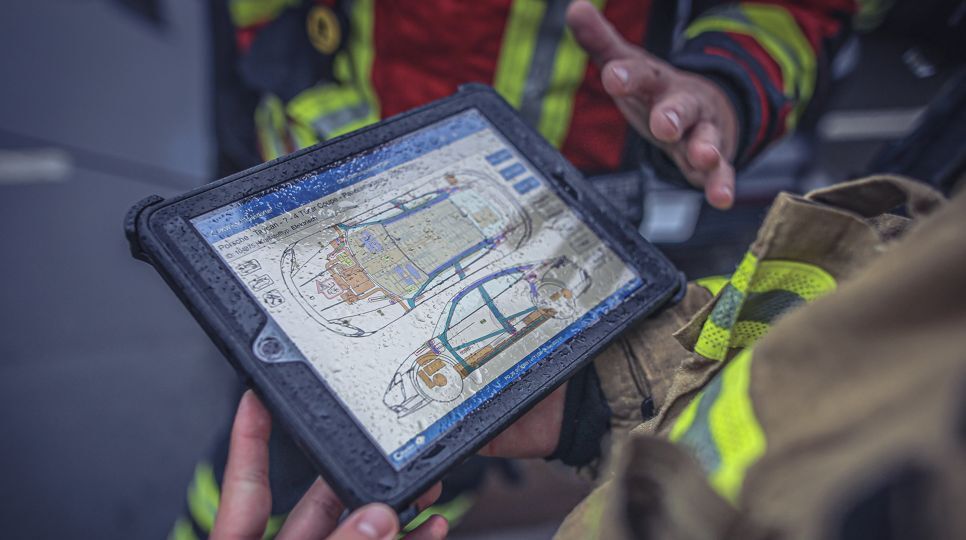
Most extrication training is built around passenger cars, because that is where most crashes happen. But the vehicles crews actually meet are far more varied: delivery vans, articulated lorries, city buses, tractors, construction machinery, motorcycles and motorhomes.
And all of them are changing in the same direction as cars, with new propulsion systems and new manufacturers arriving every year.
Bigger vehicles, less familiar hazards
Larger and specialised vehicles carry hazards that crews meet less often and that differ from model to model, so memory and general training are not enough.
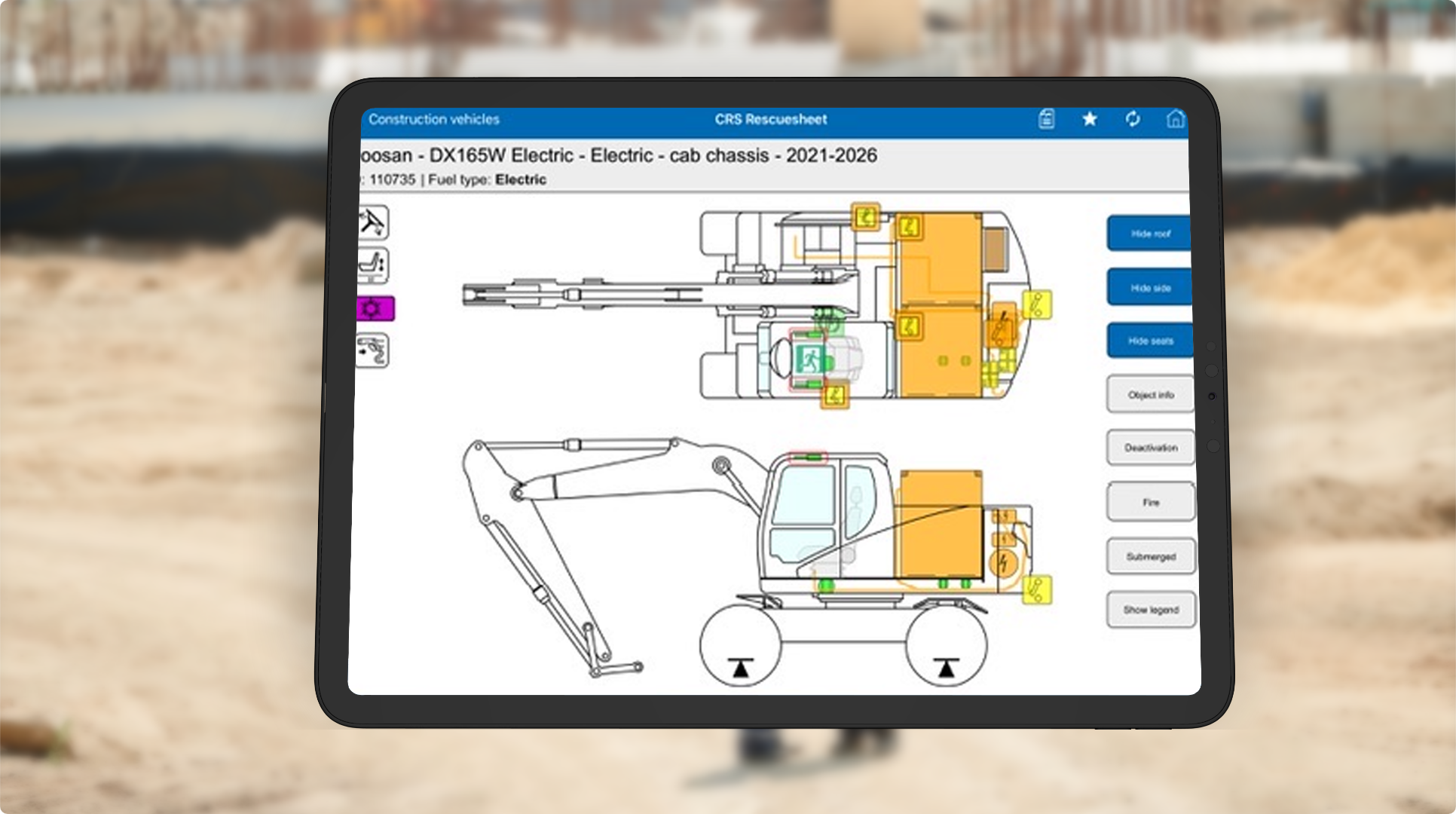
A bus or truck may carry several battery packs, compressed gas or hydrogen tanks, or high-voltage systems in places a car never would. Buses add another complication: they are often built to order, and a buyer may ask for components to be placed differently from the standard layout. Two buses of the same model can look identical from the outside and still have batteries, tanks or cables in different places. Agricultural and construction vehicles are heavy, carry hydraulic systems and are increasingly electric. Motorcycles and electric two-wheelers put batteries close to the rider.
Motorhomes combine a base vehicle with gas cylinders and extra batteries in the living area.The same principle applies as for cars: crews need the model-specific deactivation procedure before the first cut, not a general rule. Our article on how EV rescue data lookup helps first responders covers that in detail for passenger cars.
From motorcycles to tractors: 11 vehicle categories in CRS
Bliksund CRS covers 11 vehicle categories, with more than 100,000 rescue sheets across 3,000 vehicle models from 252 brands.
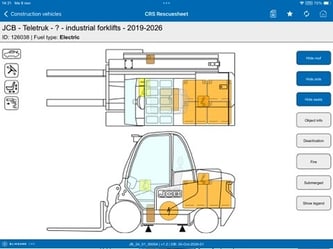
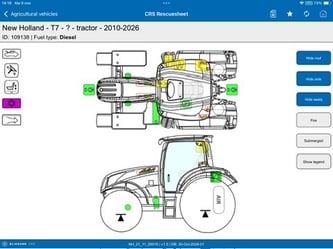
The categories include cars, vans, trucks, buses, two-wheelers, motorhomes, agricultural vehicles, construction vehicles, trailers and energy storage systems. Beyond the standard car components, CRS shows special truck and bus components and alternative propulsion systems, alongside airbags, belt pretensioners, reinforcements, fuel tanks, SRS control units and batteries.
Databases are available for Europe, North America and Australasia, in left and right-hand drive variants depending on the region. For UK services, that means rescue sheets match the right-hand drive vehicles on British roads.
Often in the database before it's on the road
CRS receives free online updates every month, and new models are often added before they reach the market.
Bliksund is an official partner of the major vehicle manufacturers and sources rescue data directly from them, including full high-voltage information, battery packs, high-voltage and charge cables, and fuel cells. Updates download automatically whenever the device has mobile coverage, so crews do not need to remember to update before a shift. This matters as new manufacturers, many of them from China, enter European markets with models few crews have seen.
Plate, VIN or a quick scan
Scanning uses the device camera with automatic text recognition, a quicker alternative to typing a 17-character VIN. When darkness, rain or damage make the plate hard to scan, the crew can type the plate or VIN instead, or search manually and browse by vehicle category.
Manual search also helps when a plate is missing or the vehicle is not registered, which is common for construction machinery and some agricultural vehicles. A real case: when a hydrogen fuel cell bus became stuck under a viaduct in the Netherlands, number plate lookup gave firefighters the data they needed.
What can dispatch do before the crew arrives?
Dispatch centres and team captains with access to CRS can pin a rescue sheet in advance, so responding crews have it ready instead of searching on scene.
When a caller reports a crashed bus or truck and the registration is known, the control room can identify the vehicle and pin its sheet while units are still on the road. Crews can agree on an approach and assign roles before arrival. For larger vehicles, where the extrication plan takes longer to work out, that time on the way is worth having.
Tap the component, get the procedure
Every CRS rescue sheet is interactive and follows the ISO 17840 standard for rescue information.
Instead of scrolling through a static PDF, crew members tap a component in the vehicle diagram to open its specific deactivation procedure. The interface is built for touchscreen use with gloves, and CRS runs on Windows, iOS, Android and the web. It also works offline, which matters on rural roads, in tunnels and at large incidents where mobile networks are overloaded.
Training for the vehicles you rarely see
A rescue sheet is most useful when crews already know how to read it under pressure. Bliksund's CRS training programmes cover modern vehicle technology and alternative propulsion systems, so crews can practise on vehicle types they rarely meet. At Artem Fire & Rescue Academy, CRS is part of rescue training for exactly this reason.
Key takeaways
- Crashes involve trucks, buses, tractors, construction machinery, two-wheelers and motorhomes, not just cars, and each has model-specific hazards.
- Bliksund CRS covers 11 vehicle categories, with more than 100,000 rescue sheets across 3,000 models from 252 brands.
- The database updates monthly at no extra cost, and new models are often added before market launch.
- Dispatch can pin a rescue sheet in advance, so crews arrive with the information ready.
- Rescue sheets are interactive, follow ISO 17840 and work offline.
FAQ
Does CRS cover trucks and buses?
Yes. CRS covers trucks and buses, including special truck and bus components and alternative propulsion systems such as high-voltage batteries and fuel cells.
Does CRS cover agricultural and construction vehicles?
Yes. Agricultural and construction vehicles are among the 11 vehicle categories in CRS, alongside cars, vans, trucks, buses, two-wheelers, motorhomes, trailers and energy storage systems.
How often is CRS updated?
Every month, with free online updates that download automatically when the device has mobile coverage or wifi. New models are often added before they reach the market.
Does CRS work for right-hand drive vehicles in the UK?
Yes. CRS databases come in left and right-hand drive variants depending on the region.
Can CRS be used without mobile coverage?
Yes. CRS works offline and updates automatically once the device is back on a mobile network or wifi.
See how CRS handles the vehicles your crews meet least often.
Request a quote or a trial licence for CRS, or compare CRS packages and pricing.